|
|
CURRENT RESEARCH INTERESTS |
|
|
|
Discovering Novel Structures, Reaction Mechanisms and Chemical Phenomena Using Computational Quantum Chemical Methods
Computational Design of Conjugated Polyelectrolytes and Polymers for Optoelectronic Applications
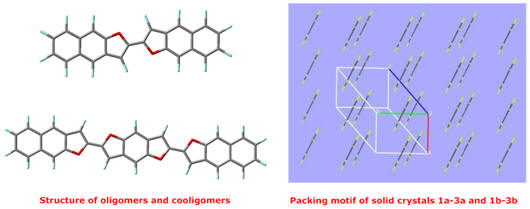
Thanks to many interesting optical and electronic properties, conjugated organic materials have been extensively used as building materials for optoelectronic devices such as organic/polymer light emitting diodes (OLEDs/PLEDs), dye-sensitized solar cells (DSSCs), etc. Organic materials have the advantages of being low cost and convenient in experimental synthesis and modifications. DSSCs belong to a class of organic solar cells, a solid state electrical device that converts the energy of light directly into electricity by photovoltaic effect in which one or several organic photoactive layers are sandwiched between two electrodes. The working mechanism of an organic solar cell is opposite to that of OLEDs/PLEDs. Therefore, the chemical strategies to modify key processes in DSSCs are in general similar to those for OLEDs/PLEDs. The conjugated polyelectrolytes (CPEs) have very unique characteristics which include a combination of the optical and electronic properties of both conjugated polymers and polyelectrolytes. Since the emission efficiency of CPEs in solid state is low, most CPEs are used as electron transport layers (ETMs) or hole transport layers (HTMs). Excellent efficiencies have been reported for PLEDs with high work function cathodes and CPE electron transport layers. The low cost fabrication of CPEs also makes them attractive new materials in solar cells. The application of CPEs in DSSCs have been reported to yield good power conversion efficiency (PCE). In this research project we propose to investigate theoretically the structures and properties of a series of potential compounds that could be used as starting building blocks. The purpose is to modify the properties of organic materials and thereby to design new efficient materials for optoelectronic applications. Our theoretical investigations will be carried out in concert with experimental studies in such a way that our theoretical predictions could directly be tested by experiment.
|
|
|
|
|
|
Copyright ©2003 Quantum Chemistry - All rights reserved. Designed by Phung Quan. Last Updated: 06/19/2013 | |