Quantum Chemistry
Nguyen Group

CURRENT RESEARCH INTERESTS


Discovering Novel Structures, Reaction Mechanisms and Chemical Phenomena Using  Computational  Quantum  Chemical  Methods


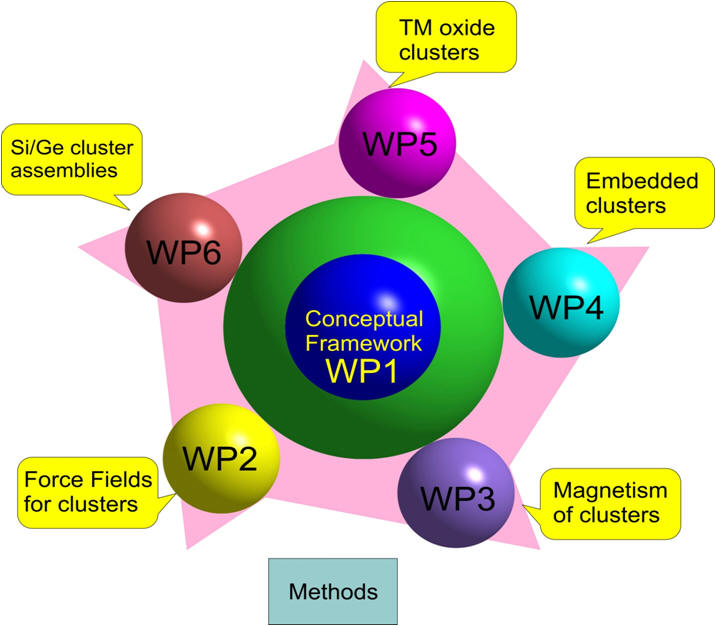
I. Geconcerteerde  Onderzoeksactie  (GOA)  Project: Quantum  Rules  for  Nanoclusters

                                                                                    by Minh T. Nguyen, Arnout Ceulemans, Liviu Chibotaru and Marc Hendrickx

Chemistry consistently thrives on concepts, models and rules. The concept of electron-pair developed by Lewis a century ago (1916) remains for example a pillar of modern chemistry. The Woodward-Hoffmann rules first introduced in 1965, that changed the way of thinking of chemists, continue to be an efficient tool for rationalizing and predicting organic reactions. Many of these were however formulated empirically and therefore need to be continuously tested by the wealth of new findings. The pivotal concept of aromaticity is thus facing real challenges when dealing with non-planar compounds, as the classical Hückel rule is valid only for planar systems. The fast symbiotic interaction between modern experiment and theory helps to regularly scrutinize them and lead to further improvements, in particular for understanding the properties of numerous emerging classes of compounds. The theory of chemical bonding, supported nowadays by high accuracy electronic structure computations, provides us with a unifying approach in the discovery of concepts and rules that govern the universe of chemical exploration. More>>>>


II. Computational Design of Conjugated Polyelectrolytes and Polymers for Optoelectronic Applications


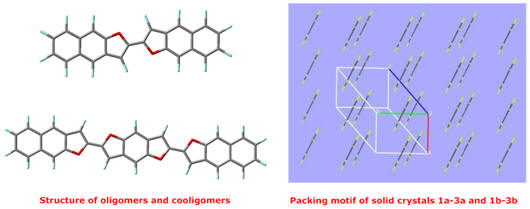
Thanks to many interesting optical and electronic properties, conjugated organic materials have been extensively used as building materials for optoelectronic devices such as organic/polymer light emitting diodes (OLEDs/PLEDs), dye-sensitized solar cells (DSSCs), etc. Organic materials have the advantages of being low cost and convenient in experimental synthesis and modifications. More >>>>


III. Formation and Reactions of Formamide and Related Prebiotic Compounds

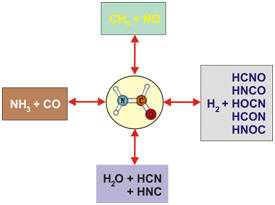
      Formamide (NH2CHO, FM) has recently been considered as an active key precursor in prebiotic Earth chemistry leading to more complex biomolecules. It also has been tentatively identified in interstellar ices, the long period comet C/1995 O1 Hale-Bopp, and in the protostellar source NGC 7538 IRS9. These findings have fueled interest in FM’s role in the formation of more complex molecules such as amino acids on interstellar icy grains. FM is the simplest stable organic species having the four most common (CHNO) elements. It is the simplest member of the amide functional group, which contains the prototypical NH-C=O peptide linkage. This linkage is reactive at both amino and carbonyl sites and is expected to constitute a key building block for formation of nucleic acids. More >>>>


IV. Materials for Chemical Hydrogen Storage (CHS): Mechanism for H2 Release.

 Energy profiles showing the pathways for H2-release from AlH3 + BH3 + N2H4. Relative energies in kcal mol−1 at the CCSD(T)/aVTZ + ZPE level. Small balls are H atoms.

Hydrogen is one of the most cleanest and idealized energy sources. In the past few years, several different technologies including compression, liquefaction, metal hydride, and adsorbent material were developed to be used for hydrogen storage. There are currently several candidate storage systems for hydrogen including liquid or high-pressure H2 gas, reversible metal hydrides, chemical hydrides, and porous adsorbents. However, up to date none is capable of satisfying the DOE criteria of size, recharge, kinetics, cost, and safety required for use in transportation. Among these present technologies, the application of adsorbent material is safer and more efficient than any other technologies in terms of controlling hydrogen storage. More >>>>

V. Theoretical Thermochemistry and Reaction Mechanisms.

      In this long-term project, we determine the thermochemical properties, kinetic parameters and molecular mechanisms of different classes of (organic and inorganic) reactions using high level quantum chemical computations. The electronic mechanisms will be probed using the concepts derived from density functional theory


Copyright ©2003 Quantum Chemistry - All rights reserved. Designed by Phung Quan. Last Updated: 06/19/2013